I often tell my clients that motivation is like taking a bath: it’s something I recommend you do daily. You can’t just “set it and forget it.” Yet, so many businesses treat workplace motivation strategies as a checkbox exercise. They launch a new incentive program, hold a one-off “rah-rah” session, and then wonder why the energy in the room has fizzled out by next Tuesday.
If you’ve been feeling like your team is stuck in the mud despite your best efforts, you aren’t alone. The truth is, most standard workplace motivation strategies are fundamentally flawed because they ignore how human beings actually work. They focus on the what but completely miss the why and the how.
Through my work at Your Success, I’ve seen time and again that the most expensive employee engagement tools often fail because they lack personal relevance. I don’t believe in “inventing” motivation; I believe in detecting it.
Here are 10 reasons why your current strategies might be falling flat, and how I can help you turn things around.
1. You’re Using a “One-Size-Fits-All” Approach
This is the most common mistake I see. You assume that every member of your team is motivated by the same things: usually money, a promotion, or perhaps a “Star of the Month” plaque. But the reality is that everyone is wired differently.
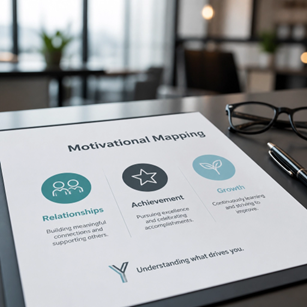
Some of your team members might be driven by the Relationship cluster (wanting to belong), while others are focused on Achievement (hitting targets) or Growth (developing new skills). When you try to motivate a “Growth” person with a simple cash bonus but no training opportunity, you’re speaking a language they don’t understand.
2. You’re Ignoring the “Energy Gap”
You might have a highly skilled team, but skill doesn’t equal energy. I’ve worked with teams that have all the talent in the world but are only 50% “charged.”
Standard strategies often ignore how motivated someone actually is right now. Without measuring that energy, you’re just throwing strategies at a wall. Using Motivational Mapping, I help you see the exact energy levels of your team so we can address the specific areas where the “battery” is low.
3. Your Strategies Are Too Complex
I’ve seen managers get bogged down in massive, 100-question personality profiles that take hours to complete and even longer to analyze. By the time the results are in, the team is already bored.
I prefer to keep it simple and actionable. The mapping tool I use takes only 10 minutes to complete. It’s a self-perception inventory, not a psychometric test. It gets straight to the heart of the matter so we can stop talking and start doing.
4. You’re Relying Solely on Extrinsic Rewards
Carrots and sticks: rewards and punishments: only work for so long. If your entire motivation strategy is built on bonuses, people will eventually stop caring once they have “enough.”
To create real change, I help you tap into intrinsic motivators. When an employee understands how their daily tasks align with their personal values: whether that’s autonomy, security, or creativity: they don’t need a carrot to get moving. They have their own internal engine.
5. You Assume Motivation is Static
As I mentioned, motivation changes. What drove your top salesperson three years ago might not be what drives them today. Life happens: people start families, their priorities shift, or they simply get burnt out.
If your strategy hasn’t changed in years, it’s out of date. I recommend repeating mapping exercises at least twice a year, especially during periods of change. It allows me to help you stay in sync with your team as they evolve.
6. You’re Neglecting the Power of Relationships
In many corporate environments, “Relationships” are seen as a “nice-to-have” or something for the Christmas party. But for many employees, connection is their primary driver.
If your motivation strategy is purely individualistic and competitive, you’re actively demotivating the people who value harmony and teamwork. I focus on building a supportive environment where collaboration is rewarded just as much as individual output.
7. There’s a Lack of Actionable 30-Day Goals
Vague goals like “improve productivity” or “be more positive” mean nothing to a busy employee. They are too big and too distant.
I specialize in breaking down these big aspirations into measurable 30-day goal setting. When you can see progress in just four weeks, motivation naturally builds. It’s about creating small wins that lead to big behavioral changes.
8. You’ve Built a Culture of Fear
Some managers use “motivation” as a euphemism for “pressure.” They use desperation to avoid conflict, thinking that if they keep people on edge, they’ll work harder.
This might work for a week, but it’s a recipe for burnout and high staff turnover. True motivation requires psychological safety. I work with management teams to shift away from fear-based tactics toward a solution-focused mindset that builds resilience.
9. You Aren’t Aligning Personal Motivators with Company Vision
If your company’s mission is all about “Innovation” (Growth) but your employees are primarily motivated by “Security” (Relationships/Stability), there is a massive disconnect.
I use Organisational Motivational Maps to help you map your people to your culture. When individual drivers are aligned with the company’s mission, you don’t have to “push” people toward the goal; they’re already running in that direction.
10. You Aren’t Investing in “Mental Resilience”
Even the most motivated person will struggle if they don’t have the mental tools to handle stress. Workplace motivation isn’t just about feeling good; it’s about staying strong when things get tough.
My short courses on building mental resilience are designed to give your team the “armour” they need to maintain their motivation through challenges. Without resilience, motivation is fragile.
How I Help You Fix It
I don’t believe in generic advice. My approach is rooted in practical exercises and real-world behavioral changes. When I work with you, we don’t just talk about “feeling motivated”: we look at the data.
The Motivational Mapping Process:
- Individual Maps: We start by understanding what makes each person tick.
- Team Dynamics: We look at how those individuals work together and where the energy gaps are.
- Actionable Tips: I provide you with strategies tailored specifically to your team’s profile.
- 30-Day Goals: We set clear, measurable targets to ensure the change sticks.
- If you’re tired of strategies that look good on paper but fail in the office, I’m here to help you bridge that gap. Whether you’re a commercial manager looking to boost sales or a CEO wanting to foster a more positive culture, I can provide the roadmap to get you there.
6. Ready to truly understand what drives your team?
- Motivation shouldn’t be a mystery. If you want to stop guessing and start growing, I’d love to have a chat. We can look at how Motivational Mapping can be integrated into your business to drive real, measurable change.
- Let’s Talk directly about how I can support your journey toward a more motivated, resilient, and successful team.